
Tag: Local SEO for Home-Service Businesses
How to Add Categories, Subcategories, & Services to Your Google Business Profile

Optimizing your Google Business Profile (GBP) by adding relevant categories, subcategories, and services is essential for home-service businesses aiming to enhance their online visibility and attract more customers. In the “How to Add Categories, Subcategories, & Services to Your Google Business Profile” video, you learn effective strategies to categorize your business accurately. This comprehensive guide will expand on those instructions, providing you with detailed steps, best practices, and additional insights to ensure your GBP is fully optimized for maximum impact.
Why Proper Categorization Matters
Accurate categorization of your business on Google is fundamental for several reasons:
Enhanced Visibility in Search Results
Choosing the right categories ensures that your business appears in relevant search queries. When potential customers search for specific services you offer, Google matches these queries with your GBP categories, increasing the likelihood of your business being displayed prominently.
Improved Local SEO
Google uses your business categories to understand what your business does, which directly influences your local SEO rankings. Proper categorization helps Google index your business correctly, making it easier for customers in your service areas to find you.
Targeted Customer Reach
By selecting specific subcategories, you can target niche markets within your industry. This precision helps attract customers who are specifically looking for the services you offer, improving the quality of leads and increasing conversion rates.
Step-by-Step Guide to Adding Categories, Subcategories, & Services
Follow these steps to effectively add and manage categories, subcategories, and services in your Google Business Profile.
Step 1: Access Your Google Business Profile
- Sign In to Your GBP Account
- Navigate to Google Business Profile and click on “Manage now.”
- Log in using the Gmail account associated with your business profile. Ensure you have administrative access to make changes.
- Select the Appropriate Business Profile
- If you manage multiple business profiles, select the one you want to update. This ensures you’re working on the correct profile.
Step 2: Navigate to the Categories Section
- Open the Profile Dashboard
- Once signed in, you’ll be directed to your business’s dashboard. Here, you can manage various aspects of your profile, including information, photos, and reviews.
- Locate the “Categories” Tab
- In the dashboard menu, find and click on the “Categories” tab. This section allows you to add and manage the categories and services your business offers.
Step 3: Add Primary and Secondary Categories
- Add Primary Category
- Click on the “Add Primary Category” button.
- Enter the main category that best describes your business. For example, if you’re a plumbing company, select “Plumber.”
- Add Secondary Categories
- You can add up to nine secondary categories. These should represent other services or specialties your business offers.
- For instance, a plumbing company might add secondary categories like “Drain Cleaning,” “Leak Detection,” or “Bathroom Remodeler.”
Step 4: Add Subcategories and Specific Services
- Use a Tool for Recommendations
- Utilize tools like GMB Everywhere to get recommendations for relevant categories and subcategories. This ensures you’re covering all aspects of your services without overloading your profile.
- Select Relevant Subcategories
- Within each category, add subcategories that are specific to the services you provide. For example, under “Bathroom Remodeler,” you might add “Bathtub Reglazing” or “Grab Bar Installation” if these are services you offer.
- Avoid Irrelevant Subcategories
- Only add subcategories that are directly related to your business operations. Adding irrelevant subcategories can confuse customers and dilute your profile’s effectiveness.
Step 5: Add Custom Services
- Click on “Add More Services”
- If you offer services that are not listed in the recommended categories, click on the “Add More Services” button.
- Enter Custom Service Details
- Input the name and description of the custom service. For example, “Eco-Friendly Plumbing Solutions” or “24/7 Emergency Plumbing Services.”
- Save the Custom Service
- After entering the details, click “Save” to add the custom service to your profile.
Step 6: Review and Save Changes
- Double-Check Your Entries
- Ensure that all categories, subcategories, and services accurately reflect your business offerings. Verify that there are no spelling mistakes or incorrect entries.
- Save All Changes
- Click the “Save” button to apply all your updates to your Google Business Profile.
Best Practices for Managing Categories, Subcategories, & Services
Implementing best practices ensures that your GBP categories and services are optimized for maximum visibility and effectiveness.
Be Specific and Accurate
- Choose Precise Categories: Select categories that closely match your primary business activities. Avoid overly broad categories that can dilute your profile’s relevance.
- Use Exact Terms: If Google offers a specific category that matches your service, use it. For example, “Emergency Plumbing Services” is more specific and effective than just “Plumber.”
Utilize Recommended Tools
- Leverage Tools like GMB Everywhere: Use tools to discover additional relevant categories and subcategories. These tools can provide insights into what competitors are using and suggest optimal categories for your business.
Regularly Update Your Profile
- Keep Information Current: As your business evolves, update your categories and services to reflect new offerings or changes in your operations.
- Add Seasonal Services: Incorporate seasonal services or promotions into your categories to capture timely customer interest.
Optimize Service Descriptions
- Clear and Concise: Write clear and concise descriptions for each service. Highlight the benefits and unique aspects of each service to attract more customers.
- Incorporate Keywords: Use relevant keywords naturally within your service descriptions to improve local SEO and search visibility.
Avoid Overloading with Irrelevant Categories
- Stay Relevant: Only add categories and subcategories that are relevant to your business. Irrelevant categories can confuse customers and negatively impact your SEO.
- Maintain Focus: Focus on the core services that define your business. This helps in maintaining a strong and focused online presence.
Consistent Branding
- Align with Website Content: Ensure that the categories and services listed in your GBP align with the content on your website. Consistency across platforms reinforces your brand and improves trust.
- Use High-Quality Images: Complement your categories with high-quality images that represent each service. Visual content enhances the appeal and credibility of your profile.
Common Mistakes to Avoid
Avoiding common pitfalls can ensure that your GBP remains effective and continues to drive quality leads.
Adding Irrelevant Subcategories
- Impact: Adding subcategories that do not reflect your actual services can mislead customers and harm your SEO rankings.
- Solution: Only include subcategories that are directly related to the services you offer. Regularly review and update your subcategories to maintain relevance.
Overcomplicating Categories
- Impact: Having too many categories can dilute the focus of your profile and make it harder for customers to find what they’re looking for.
- Solution: Limit the number of categories to those that are most relevant and impactful. Focus on quality over quantity.
Neglecting Regular Updates
- Impact: An outdated profile can lead to missed opportunities and reduce customer trust.
- Solution: Schedule regular reviews of your GBP to ensure that all information is current and accurately reflects your business offerings.
Ignoring Category Recommendations
- Impact: Missing out on optimal categories can limit your visibility in search results.
- Solution: Utilize recommended tools and guidelines to choose the best categories for your business. Stay informed about new categories that Google may introduce.
Inconsistent Information Across Platforms
- Impact: Inconsistencies between your GBP and other online platforms can confuse customers and harm your SEO.
- Solution: Ensure that your business hours, services, and other key information are consistent across all platforms, including your website and social media profiles.
Frequently Asked Questions
How Many Categories Can I Add to My Google Business Profile?
You can add up to nine categories to your GBP, including one primary category and up to eight secondary categories. Focus on selecting the most relevant and impactful categories to maximize your profile’s effectiveness.
Can I Add Custom Categories if They Are Not Listed?
Yes, you can add custom services to your GBP even if they are not listed in Google’s recommended categories. Click on “Add More Services” and enter the details of the custom service to include it in your profile.
How Often Should I Update My Categories and Services?
Regularly review and update your categories and services at least once a month or whenever there are significant changes in your business operations. Keeping your profile current ensures that it remains relevant and effective in attracting customers.
What Tools Can Help Me Choose the Right Categories?
Tools like GMB Everywhere can provide recommendations for categories and subcategories based on your business type. These tools analyze competitor profiles and suggest optimal categories to enhance your GBP.
What Should I Do If a Category Change is Disapproved by Google?
If Google disapproves a category change, review Google’s category guidelines to ensure compliance. Make sure the new category accurately represents your business services, and try submitting the change again with the necessary adjustments.
Maximizing the Impact of Categories, Subcategories, & Services
To fully leverage the benefits of adding categories, subcategories, and services to your GBP, integrate these strategies into your broader marketing and operational plans.
Align with Your Marketing Strategy
- Targeted Campaigns: Use your GBP categories to support targeted marketing campaigns. Highlight specific services in your ads and promotions that align with your GBP categories.
- Content Marketing: Create blog posts, social media content, and other marketing materials that emphasize the services listed in your GBP. This reinforces your expertise and improves SEO.
Enhance Customer Engagement
- Detailed Service Pages: Link your GBP services to detailed service pages on your website. This provides customers with more information and improves the SEO performance of your website.
- Interactive Content: Use interactive content like videos and infographics to showcase your services. Visual content can engage customers and provide a better understanding of your offerings.
Monitor and Analyze Performance
- Use Analytics Tools: Leverage Google Analytics and GBP insights to monitor how different categories and services are performing. Identify which services generate the most leads and optimize your offerings accordingly.
- Adjust Based on Data: Use performance data to refine your categories and services. Focus on high-performing areas and consider removing or adjusting categories that are underperforming.
Foster Team Collaboration
- Training and Guidelines: Ensure that all team members understand the importance of accurate categorization. Provide training on how to manage and update categories and services in the GBP.
- Consistent Updates: Encourage team members to regularly update the GBP with new services, photos, and other relevant information. Consistency ensures that your profile remains dynamic and engaging.
Leverage Customer Feedback
- Incorporate Reviews: Use customer reviews to identify popular services and areas for improvement. Highlight these services in your GBP categories to attract more customers.
- Adjust Services Based on Demand: Adapt your service offerings based on customer feedback and market demand. Use this information to add or refine categories and services in your GBP.
Conclusion
Effectively adding categories, subcategories, and services to your Google Business Profile is a powerful strategy for home-service businesses seeking to enhance their online presence and attract more customers. By following the step-by-step guide provided in this post, implementing best practices, and avoiding common mistakes, you can ensure that your GBP is fully optimized for maximum visibility and effectiveness. Proper categorization not only improves your local SEO but also helps potential customers find the exact services they need, driving more high-quality leads and fostering business growth. Regularly review and update your categories to stay aligned with your business goals and market trends, ensuring sustained success in a competitive landscape.
How to Change Business Hours & Ad Schedule in Google Local Services Ads
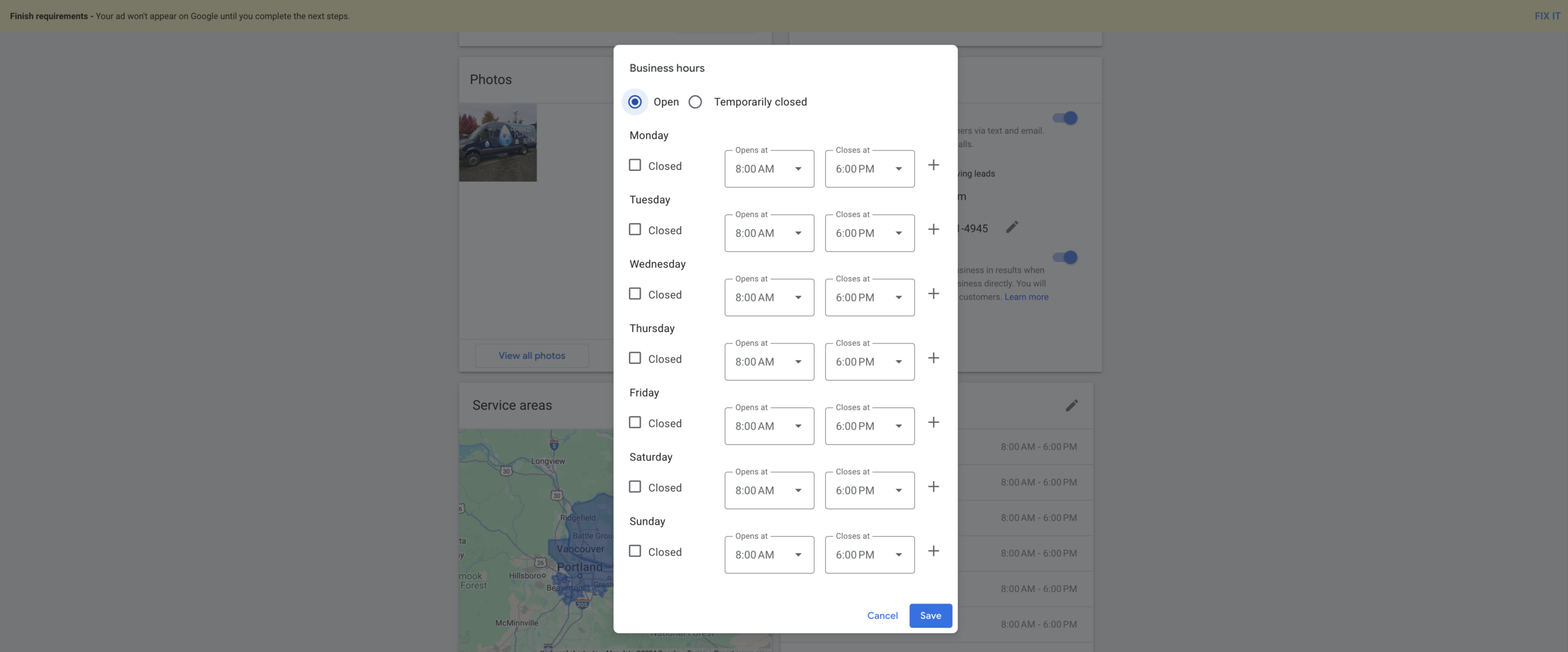
Managing your business hours and ad schedule in Google Local Services Ads (LSA) is essential for home-service businesses aiming to optimize their online presence and attract the right customers. In the “How to Change Business Hours & Ad Schedule in Google Local Services Ads” video, you learn how to effectively adjust your operating hours and ad timings to ensure that your business remains visible and responsive during peak times. This comprehensive guide will expand on those instructions, providing you with detailed steps, best practices, and additional insights to help you manage your business hours and ad schedule efficiently.
Why Managing Business Hours & Ad Schedule Matters
Properly managing your business hours and ad schedule in Google Local Services Ads is crucial for several reasons:
Enhance Customer Experience
Ensuring that your business hours are accurately reflected in your LSA ensures that customers can reach you when they need your services. This alignment prevents frustration from missed calls and increases the likelihood of converting leads into customers.
Optimize Ad Performance
Running your ads during hours when your business is operational maximizes the effectiveness of your advertising spend. It ensures that leads generated by your ads can be promptly addressed, improving conversion rates and return on investment (ROI).
Improve Local SEO
Google considers user engagement and responsiveness as factors in local SEO rankings. Accurate business hours and an optimized ad schedule signal to Google that your business is active and reliable, potentially boosting your visibility in local search results.
Step-by-Step Guide to Changing Business Hours & Ad Schedule
Follow these steps to effectively update your business hours and ad schedule in your Google Local Services Ads account.
Step 1: Access Your Google Local Services Ads Account
- Sign In to Your Account
- Navigate to Google Local Services Ads and click on “Sign in” at the top right corner.
- Enter the Gmail account credentials associated with your LSA account.
- Select the Correct Business Profile
- If you manage multiple business profiles, ensure you select the one you want to update. This guarantees that changes are made to the appropriate profile.
Step 2: Navigate to the Profile and Budget Tab
- Open the Dashboard
- Once signed in, you’ll be directed to your LSA dashboard where you can manage various aspects of your ads and business information.
- Locate the “Profile and Budget” Tab
- In the dashboard menu, find and click on the “Profile and Budget” tab. This section allows you to manage your business information, advertising budget, and other settings.
Step 3: Update Business Hours
- Scroll Down to the Business Hours Section
- Within the “Profile and Budget” tab, scroll down until you find the “Business Hours” section. This area displays your current operating hours.
- Click on “Edit Business Hours”
- Click the “Edit” button to modify your business hours. Ensure that these hours match those on your Google Business Profile (GBP) to maintain consistency.
- Set Your Operating Hours
- Enter your standard business hours. For example, if your business operates from 8 AM to 6 PM, input these times accurately.
- Temporary Closures: If your business will be temporarily closed (e.g., holidays or maintenance), use the “Temporary Close” option to inform customers accordingly.
- Save Your Changes
- After updating your hours, click “Save” to apply the changes to your LSA account.
Step 4: Adjust the Ad Schedule
- Locate the Ad Schedule Section
- Still within the “Profile and Budget” tab, find the “Ad Schedule” section. This feature allows you to specify when your ads should run.
- Edit the Ad Schedule
- Click on “Edit Ad Schedule” to customize the times and days your ads will be active.
- Match Business Hours: Ideally, set your ad schedule to align with your business hours. This ensures that leads generated by your ads can be promptly addressed.
- Custom Scheduling: If you want your ads to run outside of standard business hours for specific reasons (e.g., capturing early morning or late evening customers), adjust the schedule accordingly.
- Save the Ad Schedule
- Once you’ve configured the desired ad timings, click “Save” to implement the new schedule.
Step 5: Verify Your Changes
- Review Updated Settings
- After saving, review your business hours and ad schedule to ensure they are correctly set.
- Consistency Check: Confirm that your business hours in LSA match those in your GBP to avoid confusion and enhance customer trust.
- Monitor Ad Performance
- Keep an eye on your ad performance metrics to assess the impact of the changes. Look for improvements in lead generation and conversion rates.
Best Practices for Managing Business Hours & Ad Schedule
Implementing best practices ensures that your business hours and ad schedule are optimized for maximum effectiveness.
Ensure Consistency Across Platforms
- Uniform Hours: Make sure that your business hours are consistent across all platforms, including GBP, LSA, your website, and social media profiles. Inconsistencies can confuse customers and negatively impact your SEO.
- Centralized Management: Use a centralized system or calendar to manage and update your business hours across all platforms simultaneously.
Optimize for Customer Behavior
- Analyze Peak Times: Use analytics tools to identify when your customers are most active and schedule your ads to run during these peak periods.
- Flexible Scheduling: Adjust your ad schedule based on seasonal trends or special events to capture increased demand during specific times.
Keep Your Hours Updated
- Regular Audits: Periodically review your business hours and ad schedule to ensure they remain accurate and reflect any changes in your operations.
- Prompt Updates: Update your hours immediately if there are any changes, such as extended hours for a special promotion or reduced hours during holidays.
Utilize Temporary Closures Effectively
- Inform Customers: Use the temporary closure feature to inform customers about upcoming closures. This transparency helps manage customer expectations and maintains trust.
- Plan Ahead: Schedule temporary closures in advance to ensure that your ad schedule and business hours reflect the changes accurately.
Leverage Automation Tools
- Scheduling Tools: Use automation tools to manage your ad schedule efficiently. Tools like Google Ads Scheduler can help you plan and automate your ad timings based on your business needs.
- Integration with CRM: Integrate your ad scheduling with your Customer Relationship Management (CRM) system to streamline lead management and follow-ups.
Common Mistakes to Avoid
Avoiding these common mistakes can ensure that your business hours and ad schedule management is effective and beneficial to your business.
Mismatching Business Hours
- Impact: Inconsistent business hours across platforms can lead to customer confusion and missed opportunities.
- Solution: Regularly audit your business hours to ensure they are consistent across all platforms, including GBP and LSA.
Overcomplicating the Ad Schedule
- Impact: Creating an overly complex ad schedule can lead to inefficiencies and wasted ad spend.
- Solution: Keep your ad schedule simple and aligned with your core business hours, adjusting only for specific needs or trends.
Ignoring Customer Feedback
- Impact: Failing to adjust your business hours and ad schedule based on customer behavior can result in lost leads and reduced customer satisfaction.
- Solution: Actively monitor customer interactions and feedback to inform adjustments to your business hours and ad schedule.
Neglecting to Update Temporary Closures
- Impact: Not updating temporary closures can result in customer frustration and missed appointments.
- Solution: Use the temporary closure feature to inform customers about any short-term changes in your operating hours.
Overlooking Mobile Optimization
- Impact: Many customers access your business information via mobile devices. If your business hours and ad schedule are not optimized for mobile, you may miss out on potential leads.
- Solution: Ensure that your business hours and ad schedule are clearly visible and easily accessible on mobile devices.
Frequently Asked Questions
How Do I Ensure My Business Hours in LSA Match My Google Business Profile?
To ensure consistency, always update your business hours in your Google Business Profile first. Then, replicate the same hours in your Google Local Services Ads account by following the steps outlined in this guide.
Can I Set Different Business Hours for Different Days?
Yes, you can set specific business hours for each day of the week in your Google Local Services Ads account. This flexibility allows you to accommodate varying customer demands and operational needs.
What Should I Do If I Receive Leads Outside My Business Hours?
If you receive leads outside your set business hours, consider adjusting your ad schedule to include additional times when you can respond. Alternatively, set up automated responses to inform customers when you will be available to assist them.
How Often Should I Review and Update My Ad Schedule?
It’s recommended to review your ad schedule at least once a month or whenever there are significant changes in your business operations. Regular reviews help ensure that your ad schedule remains aligned with your business needs and customer behavior.
Can I Temporarily Disable My Ads?
Yes, you can temporarily disable your ads by pausing your campaign in the Google Local Services Ads dashboard. This is useful during periods of temporary closures or significant operational changes.
Maximizing the Impact of Business Hours & Ad Schedule Management
To fully leverage the benefits of managing your business hours and ad schedule in Google Local Services Ads, integrate these strategies into your broader marketing and operational plans.
Align with Marketing Campaigns
- Seasonal Promotions: Adjust your ad schedule to coincide with seasonal promotions or special events. For example, extend your business hours and ad schedule during holiday seasons when demand may increase.
- New Service Launches: Promote new services by ensuring your ad schedule aligns with launch events or peak interest times.
Coordinate with Offline Operations
- Staff Scheduling: Ensure that your staff schedule aligns with your business hours and ad schedule to handle incoming leads efficiently.
- Customer Support: Provide adequate customer support during your advertised hours to maximize lead conversion and customer satisfaction.
Utilize Analytics for Continuous Improvement
- Monitor Performance Metrics: Use Google’s analytics tools to track the performance of your ads based on different business hours and ad schedules. Identify trends and adjust your strategies accordingly.
- A/B Testing: Experiment with different ad schedules to determine which timings yield the highest conversion rates. Use A/B testing to find the optimal schedule for your business.
Foster Communication Within Your Team
- Internal Coordination: Ensure that all team members are aware of your business hours and ad schedule. This coordination helps maintain consistency in customer interactions and service delivery.
- Feedback Loop: Create a feedback loop where team members can report on lead quality and conversion rates based on different ad schedules. Use this feedback to refine your strategies.
Enhance Customer Engagement
- Personalized Communication: Use the information from your ad schedule to personalize customer communications. For example, follow up on leads promptly during your active hours to increase conversion rates.
- Customer Convenience: Offer flexible booking options that align with your business hours, making it easier for customers to schedule services at their convenience.
Conclusion
Effectively managing your business hours and ad schedule in Google Local Services Ads is a powerful strategy for home-service businesses seeking to optimize their online presence and attract the right customers. By ensuring that your business hours are consistent across all platforms and aligning your ad schedule with your operational capabilities, you can enhance customer experience, improve ad performance, and boost your local SEO. Follow the step-by-step guide provided in this post, implement best practices, and avoid common mistakes to maximize the benefits of your Google Local Services Ads. Regularly review and adjust your settings to stay aligned with your business goals and market trends, ensuring sustained growth and success in a competitive landscape.
How to Change the Primary Category for Your Google Business Profile
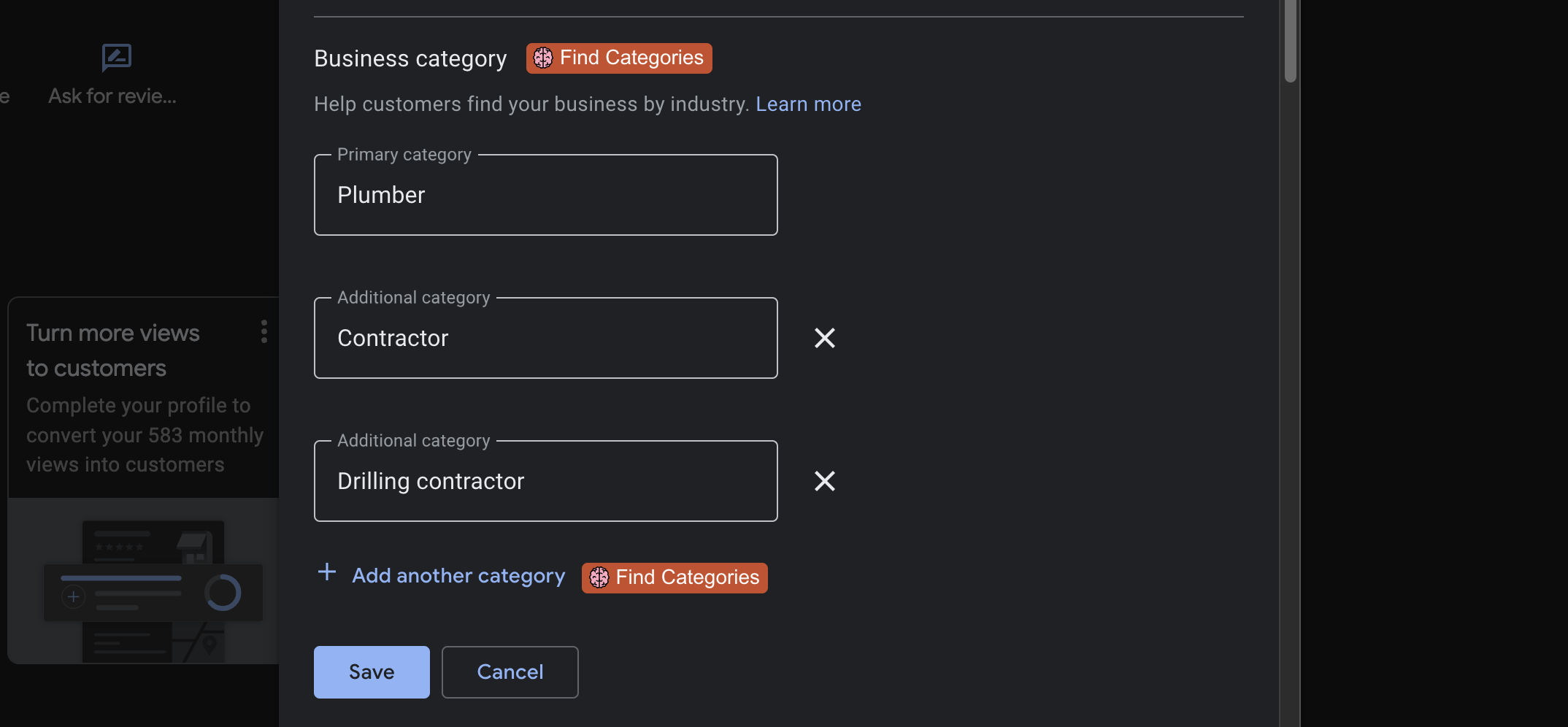
Changing the primary category for your Google Business Profile is a crucial step for home-service businesses aiming to improve their local SEO and ensure they appear in the right search results. In the “How to Change the Primary Category for Your Google Business Profile” video, you learn a straightforward method to update your business category, which can significantly impact your online visibility. This comprehensive guide will walk you through the process in detail, offering additional insights and best practices to help you optimize your Google Business Profile effectively.
Why the Primary Category Matters
Selecting the correct primary category for your Google Business Profile (GBP) is essential because it directly influences how your business appears in search results. The primary category tells Google what your business does, helping it match your profile with relevant customer searches.
Impact on Local SEO
Your primary category plays a significant role in local search engine optimization (SEO). Google uses your selected category to understand your business better and to rank it appropriately in search results. An accurate primary category ensures that your business appears when potential customers search for the services you offer, increasing your chances of attracting more clients.
Relevance to Customer Searches
When customers search for specific services, Google prioritizes businesses that match their search intent. For example, if you run a plumbing company and your primary category is set to “Plumber,” your business is more likely to appear in search results when someone looks for plumbing services in your area. Conversely, an incorrect category can lead to missed opportunities and reduced visibility.
Enhancing User Experience
An accurate primary category improves the overall user experience by ensuring that customers find businesses that genuinely match their needs. This relevance not only attracts more customers but also increases the likelihood of positive interactions and reviews, further boosting your online reputation.
Step-by-Step Guide to Changing Your Primary Category
Changing your primary category in Google Business Profile is a simple process that can be completed in just a few minutes. Follow these steps to ensure your business is accurately categorized.
Step 1: Access Your Google Business Profile
- Sign In to Your GBP Account
- Go to Google Business Profile and click on “Manage now.”
- Sign in using the Gmail account associated with your business profile. Ensure you have administrative access to make changes.
- Select the Correct Business Profile
- If you manage multiple business profiles, choose the one you want to update from the list displayed.
Step 2: Navigate to the Business Category Section
- Open the Profile Dashboard
- Once signed in, you’ll be directed to your business’s dashboard. Here, you can manage various aspects of your profile, including information, photos, and reviews.
- Locate the “Edit Profile” Tab
- In the dashboard, find and click on the “Edit Profile” tab. This section allows you to edit your business details, including your categories.
Step 3: Edit Your Business Category
- Find the Category Section
- Within the “Edit Profile” tab, scroll down to the “Business category” section. This is where you can view and edit your current categories.
- Click the Pencil Icon
- Next to your primary category, click the pencil icon to edit it. This will open a dropdown menu with a list of available categories.
- Select the Appropriate Primary Category
- Type in the new category that best describes your business. For example, if you’re a plumbing supply store, you might select “Plumbing Supply Store” instead of just “Plumber.”
- Ensure that the selected category accurately reflects your primary service or product offering.
Step 4: Add Additional Categories (Optional)
- Choose Secondary Categories
- In addition to your primary category, you can add up to nine secondary categories. These should represent other services or products your business offers.
- For example, a plumbing company might add “Emergency Plumbing Services” or “Drain Cleaning” as secondary categories.
- Save Your Changes
- After selecting the appropriate categories, click “Apply” or “Save” to update your profile.
Step 5: Await Google’s Approval
- Submission for Review
- Once you’ve made the changes, Google will review your new primary category to ensure it aligns with their guidelines.
- This process typically takes a few days, but it can sometimes take longer depending on the volume of changes being processed.
- Monitor Your Profile
- Check your GBP periodically to see if the new category has been approved. You may receive notifications via email or within your GBP dashboard regarding the status of your update.
Best Practices for Selecting the Right Category
Choosing the right primary category is essential for maximizing your GBP’s effectiveness. Here are some best practices to help you make the best selection.
Be Specific and Accurate
- Choose the Most Relevant Category: Select a category that most accurately represents your primary business activity. Avoid overly broad categories that can dilute your profile’s relevance.
- Use Exact Terms: If Google offers a specific category that matches your business, use it. For example, “Plumbing Supply Store” is more precise than just “Plumber.”
Research Competitors
- Analyze Competitor Profiles: Look at how your competitors have categorized their businesses. This can give you insights into the most effective categories for your industry.
- Identify Gaps: Find categories that your competitors may have overlooked or underutilized, allowing your business to stand out.
Utilize Secondary Categories Wisely
- Complement Your Primary Category: Use secondary categories to highlight additional services or products without overshadowing your primary offering.
- Avoid Redundancy: Ensure that your secondary categories add unique value and do not repeat the primary category or each other.
Stay Updated with Industry Changes
- Adapt to New Services: If your business expands or introduces new services, update your categories accordingly to reflect these changes.
- Monitor Google’s Category List: Google periodically updates its category options. Stay informed about new categories that may better fit your evolving business needs.
Common Mistakes to Avoid
While updating your primary category is straightforward, avoiding common mistakes can help ensure the process goes smoothly and benefits your business.
Choosing Irrelevant Categories
- Misalignment with Services: Selecting a category that doesn’t accurately represent your services can confuse customers and harm your SEO efforts.
- Overly Broad Categories: Categories like “Home Services” may be too generic and fail to highlight your specific expertise.
Ignoring Category Hierarchy
- Primary vs. Secondary Categories: Understand the difference between primary and secondary categories. The primary category should represent your main service, while secondary categories can highlight additional offerings.
- Prioritizing Quantity Over Quality: It’s better to have a few relevant secondary categories than many irrelevant ones.
Failing to Update Categories
- Neglecting Business Changes: As your business evolves, so should your GBP categories. Regularly review and update your categories to reflect any changes in your services or target market.
- Ignoring Google’s Guidelines: Ensure that your selected categories comply with Google’s policies to avoid delays or rejections in approval.
Overcomplicating Categories
- Too Many Categories: Adding too many categories can dilute the focus of your profile. Stick to the most relevant and impactful categories.
- Complex Naming: Avoid using complicated or unclear names for your categories. Clear and straightforward terminology is more effective.
Maximizing the Benefits of the Correct Primary Category
Once you’ve updated your primary category, it’s essential to leverage this change to its fullest potential.
Optimize Your Business Description
- Align with Your Category: Ensure that your business description complements your primary category by highlighting relevant services and expertise.
- Incorporate Keywords: Use keywords related to your primary category naturally within your description to boost SEO.
Enhance Your Service Listings
- Detailed Service Pages: Link your GBP categories to detailed service pages on your website. This provides customers with more information and improves your site’s SEO.
- Consistent Branding: Ensure that your service pages reflect the same terminology and branding used in your GBP categories for consistency.
Encourage Customer Reviews
- Targeted Feedback: Encourage customers to leave reviews that mention the specific services represented by your primary category. This reinforces your expertise and improves credibility.
- Respond to Reviews: Actively respond to reviews to show engagement and build trust with potential customers.
Monitor Performance Metrics
- Track Visibility: Use Google Analytics and GBP insights to monitor how changes in your primary category affect your search rankings and visibility.
- Adjust Strategies: Based on performance data, make informed decisions about further optimizing your categories and overall GBP strategy.
Frequently Asked Questions
How Often Should I Review My Primary Category?
It’s advisable to review your primary category at least once a year or whenever your business undergoes significant changes in services or target market. Regular reviews ensure that your GBP remains accurate and effective.
Can I Change My Primary Category More Than Once?
Yes, you can change your primary category multiple times as needed. However, frequent changes can confuse customers and may affect your SEO performance. Make changes thoughtfully and ensure each new category accurately reflects your business.
What Happens If Google Disapproves My Category Change?
If Google disapproves your category change, they will notify you with the reason. Review their guidelines, ensure your chosen category aligns with your business services, and try submitting the change again with the necessary adjustments.
Should I Use Google’s Suggested Categories or Find My Own?
It’s best to use Google’s suggested categories as they are optimized for search relevance. However, if you find a more specific category that accurately represents your business, it’s acceptable to choose that instead.
How Do I Know If My Primary Category is Affecting My SEO?
Monitor your local search rankings and GBP insights to see how changes in your primary category impact your visibility. An improvement in search rankings and an increase in customer inquiries can indicate a positive effect on your SEO.
Common Mistakes to Avoid
Choosing Irrelevant Categories
Selecting a category that doesn’t accurately reflect your primary services can lead to confusion among potential customers and negatively impact your search rankings. For instance, a plumbing company choosing “General Contractor” instead of “Plumber” might miss out on highly targeted search traffic.
Overlooking Secondary Categories
While the primary category is crucial, neglecting secondary categories can limit your visibility. Secondary categories allow you to highlight additional services you offer, such as “Emergency Plumbing Services” or “Drain Cleaning,” which can attract a broader range of customers.
Ignoring Google’s Category Guidelines
Failing to adhere to Google’s guidelines when selecting categories can result in your changes being disapproved. Make sure your selected categories are compliant with Google’s policies and accurately represent your business activities.
Not Regularly Updating Your Profile
Businesses evolve, and so should your GBP. If you expand your services or pivot your business focus, update your primary category to reflect these changes. Keeping your profile outdated can lead to missed opportunities and decreased relevance in search results.
Best Practices for Managing Your Primary Category
Conduct Regular Audits
Regularly audit your GBP to ensure that all information, especially your primary category, remains accurate and up-to-date. This proactive approach helps you stay ahead of any changes in your business or industry trends.
Use Accurate and Descriptive Language
When selecting categories, use precise and descriptive terms that clearly communicate what your business offers. Avoid vague or overly broad categories that can dilute your profile’s focus and effectiveness.
Align with Your Website Content
Ensure that your GBP categories align with the content on your website. Consistency between your GBP and website helps reinforce your SEO efforts and provides a seamless experience for customers moving between platforms.
Leverage Customer Feedback
Pay attention to the language and terms your customers use in reviews and inquiries. Incorporating these keywords into your categories can improve relevance and boost your profile’s visibility in search results.
Optimize for Local Searches
Tailor your primary category to include local identifiers if applicable. For example, “Plumbing Services in Portland, Oregon” can help you rank better for location-specific searches, making it easier for local customers to find you.
Leveraging the Correct Primary Category for Competitive Advantage
Having the right primary category not only improves your visibility but also sets you apart from competitors. Here’s how to use it to your advantage:
Highlight Specialized Services
If your business offers specialized services, make sure your primary category reflects this specialization. This can attract customers looking for specific expertise, giving you an edge over more general competitors.
Showcase Unique Selling Points
Use your category to emphasize what makes your business unique. Whether it’s eco-friendly plumbing solutions or 24/7 emergency services, highlighting these aspects can attract a niche market and differentiate you from others.
Enhance Brand Authority
A well-chosen primary category can establish your business as an authority in your field. When customers see that you are categorized correctly and consistently, it builds trust and reinforces your reputation as a reliable service provider.
Integrating Primary Category Changes with Marketing Strategies
Update Marketing Materials
Ensure that all your marketing materials, both online and offline, reflect your updated primary category. This includes your website, social media profiles, business cards, and promotional flyers.
Inform Your Team
Make sure your team is aware of the category changes and understands how to communicate them to customers. Consistent messaging across all touchpoints enhances brand coherence and customer trust.
Utilize SEO Best Practices
Incorporate relevant keywords related to your primary category into your website’s content, meta descriptions, and headings. This alignment boosts your SEO efforts, making it easier for search engines to recognize and rank your business appropriately.
Monitor Competitor Categories
Stay informed about how your competitors categorize their businesses. This knowledge can help you refine your own category selection and identify opportunities to capture market share through more precise or comprehensive categorization.
Monitoring and Evaluating the Impact of Category Changes
Track Search Rankings
Use tools like Google Analytics and Google Search Console to monitor changes in your search rankings after updating your primary category. Look for improvements in visibility and increases in website traffic from local searches.
Analyze Customer Inquiries
Pay attention to any changes in the volume and type of customer inquiries you receive. An accurate primary category should lead to more relevant inquiries, reducing the time you spend addressing unrelated questions.
Gather Customer Feedback
Ask customers how they found your business and what terms they used to search for your services. This feedback can provide valuable insights into the effectiveness of your category selection and suggest further optimizations.
Adjust Based on Performance Data
Use the data collected from monitoring tools to make informed decisions about further category adjustments or other aspects of your GBP strategy. Continuous improvement ensures that your profile remains optimized for the best possible performance.
Frequently Asked Questions
Can I Change My Primary Category More Than Once?
Yes, you can change your primary category as often as needed. However, frequent changes can confuse customers and may disrupt your SEO efforts. It’s best to select the most accurate category initially and only make changes when there is a significant shift in your business operations or services.
How Long Does It Take for Category Changes to Reflect?
Once you submit a category change, Google typically reviews and approves it within a few days. However, the exact timeframe can vary based on the volume of changes being processed. Regularly check your GBP to see if the update has been applied.
What Should I Do If Google Disapproves My Category Change?
If your category change is disapproved, review Google’s guidelines to ensure compliance. Make sure the new category accurately represents your business and try submitting the change again with any necessary adjustments.
How Do I Choose the Best Category for My Business?
Research similar businesses and see how they categorize themselves. Use Google’s category suggestions as a starting point and choose the most specific and relevant category that accurately reflects your primary services.
Can I Add Multiple Primary Categories?
No, Google Business Profile allows only one primary category. However, you can add up to nine secondary categories to highlight additional services or aspects of your business.
Common Mistakes to Avoid
Selecting a Category Based on Trends
Choosing a category solely based on current trends without considering its relevance to your core services can lead to misalignment. Always prioritize accuracy over trendiness to ensure your profile attracts the right audience.
Ignoring Google’s Category Options
Sometimes, businesses overlook specific categories offered by Google that perfectly match their services. Take the time to explore all available categories to find the one that best fits your business.
Failing to Use Specific Terms
Using broad terms like “Home Services” instead of specific ones like “Plumbing Repair” can dilute your profile’s effectiveness. Specific terms improve search relevance and attract more targeted traffic.
Not Utilizing Secondary Categories
Secondary categories provide additional opportunities to showcase your services. Ignoring them means missing out on potential visibility for other services you offer.
Overcomplicating the Category Structure
While it’s important to be specific, overcomplicating your category structure with too many subcategories can confuse customers. Aim for a balanced approach that clearly represents your primary and secondary services.
Best Practices for Maintaining an Accurate Primary Category
Regularly Review Your Business Activities
Stay informed about any changes in your business operations or services. Regular reviews ensure that your GBP categories remain aligned with what your business currently offers.
Stay Updated with Google’s Category Changes
Google periodically updates its list of categories. Keep an eye on these changes to take advantage of new categories that may better represent your business.
Use Clear and Consistent Naming
When creating or selecting categories, use clear and consistent naming conventions. This helps both customers and search engines understand your services better.
Leverage Google’s Suggestions
When editing your categories, pay attention to Google’s category suggestions. These suggestions are optimized for search relevance and can help you make more informed decisions.
Train Your Team on GBP Management
Ensure that your team members who manage your GBP understand the importance of accurate categorization and know how to update categories when necessary. Consistent management helps maintain the integrity of your profile.
Integrating Category Changes with Overall Marketing Strategy
Align Categories with Marketing Goals
Ensure that your GBP categories support your broader marketing objectives. Whether you aim to highlight new services, target specific customer segments, or expand into new areas, your categories should reflect these goals.
Promote Your Updated Profile
Once you’ve updated your primary category, promote your GBP across your marketing channels. Inform your customers through email newsletters, social media posts, and your website to increase visibility and drive more traffic to your profile.
Use Categories to Inform Content Strategy
Your GBP categories can guide your content marketing strategy. Create blog posts, social media content, and other marketing materials that align with your primary and secondary categories to reinforce your expertise and attract targeted traffic.
Monitor Competitor Strategies
Keep an eye on how your competitors categorize their businesses. Understanding their strategies can provide insights into optimizing your own categories and identifying areas for improvement.
Optimize for Seasonal and Local Trends
Adjust your categories to reflect seasonal trends or local events that may influence customer needs. For example, adding “Winter Plumbing Services” during colder months can attract customers seeking specific solutions.
Final Thoughts
Changing the primary category for your Google Business Profile is a powerful way to enhance your online presence and improve your local SEO. By selecting the most accurate and relevant category, you ensure that your business appears in the right search results, attracts the right customers, and stands out from competitors. Follow the step-by-step guide provided in this post, adhere to best practices, and avoid common mistakes to maximize the benefits of your GBP category updates. Regularly reviewing and optimizing your categories will keep your profile aligned with your business goals, ensuring sustained growth and success in the competitive home-service market.